
Homeschool
Why Brain Breaks Matter When Homeschooling
Brain breaks are simple, research-backed pauses that boost your child’s focus, memory and mood — making your homeschool day more effective, calmer and far more enjoyable.
When home educating or homeschooling, it’s vital to understand that our children’s brains are still developing. A little pause now and then can go a long way toward improving focus, mood and motivation - both for our children and ourselves!
A well-timed pause during your homeschool day is not “wasting time.” In fact, it can be one of the most powerful tools you have for improving focus and motivation, which in turn can have a positive impact on the learning that you are doing.
Let’s look at what the research says — and how to apply it practically in your home.
What Does Research Say About Brain Breaks?
1. Improved attention and concentration
Short physical activity breaks (often called “active breaks”) have been shown to improve attention, including sustained focus and accuracy. When these breaks are repeated consistently over days and weeks, the positive effects become even stronger. In simple terms: children who move regularly focus better.
2. Combatting cognitive fatigue
One study found that cognitive fatigue causes test performance to decline steadily throughout the school day — by almost 1% per hour. However, when children took short breaks, not only did the decline disappear, but performance actually improved beyond the starting point.
If you’ve ever noticed that lessons feel harder after lunch or late morning, this is why. The brain tires just like muscles do.
3. Boosts in academic performance
Research has linked short classroom-based physical activity breaks with improvements in:
Spelling
Inhibition (the ability to filter distractions)
Foreign language learning
Overall cognitive function
Movement doesn’t distract from learning — it supports it.
4. Even short bursts work
A recent study (August 2025) showed that just nine minutes of high-intensity interval exercise (HIIE) before a cognitive task significantly improved sustained attention and working memory in children aged 7–13.
Nine minutes. That’s it.
5. Movement enhances memory
When children move, blood flow and oxygen to the brain increase. Brain networks involved in movement overlap with those involved in learning and memory. This means that walking, stretching, dancing or even acting something out can strengthen cognitive processing and recall.
Movement is not separate from learning. It enhances it.
How Long Can Children Actually Concentrate?
A general rule of thumb: a child’s attention span is approximately 2–3 minutes per year of age.
| Age | Typical Attention Span |
|---|---|
| 6 | 12–18 minutes |
| 8 | 16–24 minutes |
| 10 | 20–30 minutes |
Of course, interest level, sleep, nutrition, and personality all play a role. But these averages are useful when planning your homeschool day.
If your 6-year-old is restless after 15 minutes, that’s not poor behaviour — it’s biology.
How to Integrate Brain Breaks into Your Homeschool Day
1. Teach in “learning blocks”
Instead of long lessons, try short, focused blocks aligned with the attention span estimates above.
For example, a 7-year-old would generally be able to cope with:
15-minute lesson
5-minute movement break
15-minute lesson
5-minute reset
This rhythm prevents fatigue before it builds. Don’t wait until it’s too late to take a break!
2. Make breaks active
Screentime, snacking, or zoning out may feel like breaks — but they don’t recharge the brain effectively. Active breaks (movement, laughter, breathing) are far more restorative.
3. Mix it up
Alternate between:
Physical movement
Mindfulness or breathing
Creative thinking
Humour and play
Variety keeps the nervous system balanced.
4. Be mindful of timing
Many children experience a natural dip mid-morning and mid-afternoon. Pre-empt the slump with a short energiser rather than pushing through.
5. Avoid screen-based breaks
Screens are stimulating and often make transitions back to focused work harder. Try to keep brain breaks screen-free whenever possible.
Why Brain Breaks Help (Quick Summary)
Physiological reset: Increased blood flow, oxygen and helpful neurotransmitters.
Fatigue prevention: Stops the steady decline in performance across the day.
Memory and focus boost: Enhances recall and sustained attention.
Emotional benefits: Laughter, play and movement create a positive learning atmosphere.
In homeschooling especially, where you spend all day together with your children, maintaining a positive emotional atmosphere matters just as much as academic progress.
12 Brain Break Ideas for Ages 6–10
Here are some simple, low-prep ideas you can use tomorrow:
1. Quick Dance Party
Put on one song and go all out. Jump, spin, laugh.
2. Mini HIIT (9 Minutes)
Star jumps, high knees, mountain climbers — short bursts with rests in between.
3. Simon Says
“Simon says hop on one foot!” This builds listening skills and self-control.
4. Stretching or Kid-Friendly Yoga
Simple stretches with deep breathing calm the nervous system and reset focus.
5. Nature Scavenger Walk
Step outside and find:
Something red
A smooth rock
A leaf with jagged edges
Fresh air works wonders.
6. Brain Teasers & Riddles
“What has keys but can’t open locks?” (Answer: A piano!)
Quick thinking refreshes mental flexibility.
7. Juggling or Rubik’s Cube
Hand-eye coordination and spatial thinking in action.
8. Creative Drawing
Link it to your topic:
Studying space? Draw planets in pastel and charcoal.
Learning about the savannah? Create a sunset colour wash with animal silhouettes.
9. Silly Storytime
Each person adds one sentence. The sillier, the better.
10. Mindful Breathing
Square breathing: Inhale 4 – hold 4 – exhale 4 – hold 4.
11. Freeze Dance
Dance until the music stops — freeze instantly.
12. Animal Walks
Crab walk. Frog jumps. Bear crawl. Giggles guaranteed.
Practical Tips for Parents
Set expectations: Tell children when the next break will be. Predictability reduces anxiety and resistance.
Observe your child: Some need breaks every 15 minutes. Others can manage 25. Adjust to the child, not the timetable.
Keep toys separate from breaks: It’s fine to allow play during a break — but be clear about returning to work afterward. Structure builds security.
Use humour: Tell a quick dad joke. Laugh together. Shared joy strengthens connection and cooperation.
Link breaks to your learning theme: Studying gardens? Move like worms or butterflies. Learning about planets? Spin in orbit. This makes learning feel cohesive rather than interrupted.
Final Thoughts
Brain breaks are not indulgent; they are strategic.
When we respect children’s neurological limits, we see:
Better concentration
Fewer power struggles
Stronger retention
Happier days
Homeschooling gives us the freedom to work with the brain instead of against it. A five-minute break may feel small. But over weeks and months, those small pauses can transform the atmosphere and effectiveness of your homeschool day. And that is time very well spent, one break and one step at a time.
Other articles you might be interested in

Homeschool
Homeschooling Philosophies Explained: How to Define Your Own Home Education Approach
Discover different homeschooling philosophies and learn how to define a home educat
Homeschool
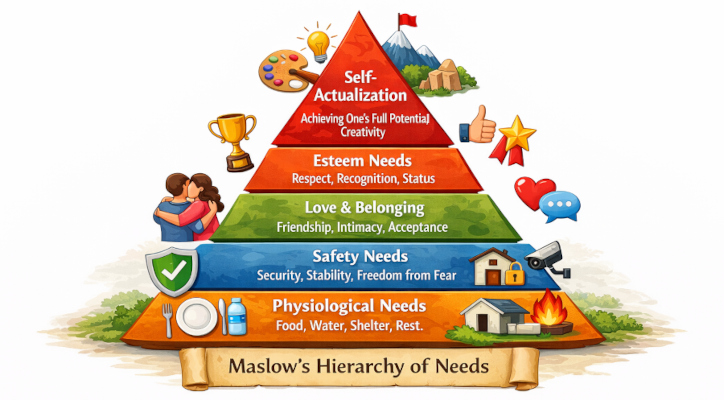
Supporting Your Child’s Needs at Home: Using Maslow’s Pyramid
Learn how you, as home educating parents, can use Maslow’s Hierarchy of Needs

Homeschool
Motivation Matters: Intrinsic and Extrinsic Motivation in Home Education
Learn the difference between intrinsic and extrinsic motivation in home education a